
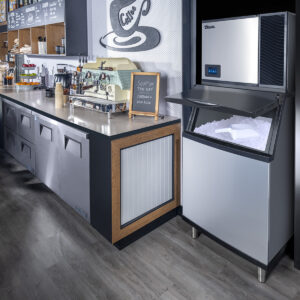
If you run a commercial kitchen, bar, grocery operation, or any business that depends on refrigeration, you’ve probably asked this at some point:
“Is it cheaper to buy, or should I just lease?”
The Simple Assumption (That Usually Isn’t True)
Most owners assume:
Buying = cheaper long-term
Leasing = higher monthly cost
On paper, that can look true.
In practice, it often isn’t.
Because the real cost of refrigeration isn’t just the unit.
What Owning Actually Costs (Beyond the Purchase Price)
Let’s break this down over a typical 3-5 year window.
1. Upfront Equipment Cost
- Reach-in cooler: $3,000 – $8,000+
- Commercial-grade ice machine (designed for continuous use): $4,000 – $10,000+
(Lower-cost units exist, but they’re typically built for light-duty use and shorter lifespans in high-demand environments with little to no parts availability)
That’s just to get it in the building.
2. Maintenance (That Always Happens)
Even well-built equipment needs:
- Coil cleaning
- Filter maintenance
- Drain line clearing
- General wear-and-tear service
Typical monthly range: $125 – $300+ per unit (depending on use and environment)
The difference is whether that maintenance is planned and consistent or reactive after something starts to fail.
3. Repairs (The Unpredictable Part)
This is where ownership gets expensive.
Common failures:
- Compressors
- Fan motors
- Control boards
- Ice machine scaling damage
Typical repair costs:
- Minor: $200 – $500
- Moderate: $500 – $1,500
- Major (compressor, etc.): $2,000 – $4,000+
And they don’t happen on a schedule.
4. Downtime (The Cost Nobody Plans For)
This is the biggest one, and the least talked about.
When a unit goes down:
- Product is at risk
- Staff is scrambling
- You’re paying emergency rates
- Operations slow or stop
Depending on your business, one failure can cost:
- Hundreds
- Or thousands
- Or more if inventory is lost
What Leasing Changes
Leasing shifts the model from: “Own the equipment and absorb the risk” to “Use the equipment while controlling cost and performance.”
1. Predictable Monthly Cost
Instead of large upfront costs plus unpredictable repairs:
You’re working with a consistent monthly number
This makes planning easier, especially for multi-location or growing operations.
2. Maintenance Is Built Into the Equation
One of the biggest differences with leasing is that equipment performance is actively managed, not ignored until something breaks.
That typically includes:
– Coil cleaning– Routine inspections
– Drain line maintenance
– Performance checks under load
That matters because most major failures don’t happen suddenly, they build over time.
With regular maintenance:
– Small issues get caught early and handled through regular commercial refrigeration maintenance
– Equipment runs more efficiently
– The likelihood of unexpected shutdowns drops significantly
3. Reduced Exposure to Major Repairs
With the right leasing structure:
You’re not absorbing large, unexpected repair costs
You’re not stuck deciding whether to repair or replace aging equipment
4. Equipment Reliability Matters More Than Ownership
What most operators actually want is:
Equipment that works
Minimal downtime
No surprises
Leasing aligns better with that goal than ownership in many cases.
Where Monitoring Changes the Equation Even More
With remote temperature monitoring, you’re not just reacting to failures, you’re catching problems early.
Real examples:
- A door gets left slightly open overnight
- A unit starts drifting out of temp at 2 am
- A compressor is struggling before it fully fails
Without monitoring:
- You find out when it’s already a problem
With monitoring:
- You get alerted before it becomes one
That directly reduces:
- Product loss
- Emergency service
- Downtime
So, Which Actually Costs More?
Buying tends to make more sense if:
- You have in-house maintenance capability
- You’re comfortable managing repair risk
- You’re operating on longer equipment cycles
Leasing tends to make more sense if:
- You want predictable costs
- Downtime would hurt your business
- You don’t want to deal with large repair decisions
- You’re growing or operating multiple locations
The Real Decision Isn’t Cost – It’s Risk
Most operators don’t struggle with the price of equipment. They struggle with:
- Unexpected failures
- Downtime
- Service delays
- Emergency costs
That’s what leasing (especially combined with monitoring) is designed to reduce.
Sensible Solutions! Superior Service!
Call us at (510) 940-8917 or Contact Us to schedule a consultation and protect your food, staff, and business with expert commercial refrigeration solutions.