
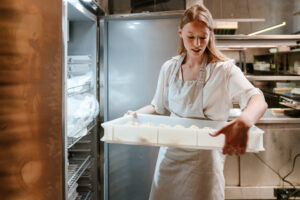
Running a restaurant is an exercise in managing a hundred things at once. In that context, it’s easy to understand how the walk-in cooler ends up on the back burner. It’s doing its job, the light comes on when you open the door, food is cold. What else is there to worry about?
Quite a bit, as it turns out. Over the years of servicing commercial refrigeration for restaurants across Oakland, San Leandro, Fremont, Berkeley, and the broader East Bay, we’ve seen the same patterns repeat. The units that fail at the worst possible times, busy Friday night, day before a health inspection, middle of summer are almost always the ones where a few specific things get overlooked.
If you are a restaurant owner, kitchen manager, or using commercial refrigerators, read on to get a clear picture of what actually matters, so the cooler stays reliable and the food stays safe.
The Most Common Mistakes We See
1. Treating the Walk-In Like It’s Self-Maintaining
Commercial walk-ins are well-built pieces of equipment, but they are not maintenance-free. The compressor, evaporator coils, fan motors, door gaskets, and drain systems all degrade over time and with use. Without periodic professional service, small issues accumulate into big failures. We’ve opened compressor compartments at restaurants that hadn’t had service in two or three years and found condenser coils so packed with grease and debris that the unit was barely functioning and consuming far more electricity than it should have been.
The fix was straightforward. The owner had no idea how close they were to a major compressor failure.
2. Door Gaskets: The Most Overlooked Component
Restaurant kitchen staff open and close the walk-in dozens of times every service. Door gaskets take the abuse. Over time they crack, lose their flexibility, or get torn and a gasket that isn’t sealing properly is one of the most quietly expensive problems a walk-in can have.
A failing gasket forces the refrigeration system to work harder to maintain temperature. That means higher energy bills, more wear on the compressor, and temperature fluctuations that affect food quality and food safety. It also means condensation and frost buildup inside the unit.
Check your door gaskets regularly. Run your hand along the seal when the door is closed, you should feel no air coming through. If the gasket has visible cracks, tears, or soft spots where it collapses rather than springs back, it needs to be replaced. This is a relatively inexpensive repair that prevents much more expensive problems.
3. Overloading the Cooler and Blocking Airflow
Walk-in coolers work by circulating cold air throughout the space. When products are stacked too high, pushed against the walls or evaporator coils, or loaded in ways that block airflow, the refrigeration system has to fight itself. Cold spots and warm spots develop. Products near the coils may freeze while products in the middle of the room stay warmer than they should.
Proper walk-in organization isn’t just about efficiency it’s directly connected to food safety. Air needs to move freely around all stored products. Evaporator coils should never have product directly in contact with them. Floor-level storage should have clearance for air circulation, and heavy loads shouldn’t be packed in so tightly that the unit can’t do its job.
4. Ignoring Temperature Fluctuations
Temperature logs exist for a reason. A walk-in that holds 36°F consistently is very different from one that cycles between 36°F and 44°F throughout the day. Both might technically be “keeping food cold,” but that swing is a food safety concern and a sign that something is wrong with the system.
Common causes include a failing door gasket (as mentioned), a defrost cycle that’s out of calibration, low refrigerant, a dirty evaporator coil, or a thermostat issue. Any of these can usually be addressed before they cause product loss or a failed health inspection but only if someone is paying attention to the temperature data.
If your walk-in doesn’t have a temperature monitoring system, it’s worth considering. Basic monitoring setups send alerts when temperatures go out of range, which means you find out about a problem before you arrive in the morning to find a walk-in full of spoiled products. Many failures show up as small temperature fluctuations before becoming major issues.
Not Training Staff on Basic Walk-In Protocol
Even the best equipment will fail faster if day-to-day use inside the kitchen isn’t handled properly. A few things that cost nothing to fix but make a real difference:
- Don’t leave the walk-in door propped open. Every minute the door is open, warm air floods in and the system has to work to pull the temperature back down. And humidity, which you don’t want.
- Let hot food cool to room temperature before placing it in the walk-in. Loading a large pan of hot stock directly into the cooler forces a temperature spike and puts stress on the entire system.
- Keep the drain area clear. Walk-in floor drains get clogged with debris over time. A blocked drain leads to standing water, ice buildup, and eventually a slip hazard and a maintenance call.
- Report problems immediately. If a staff member notices the walk-in is warmer than usual, or hears a new sound, or sees unusual frost buildup, that information needs to get to a manager right away, not at the end of the week.
Skipping Coil Cleaning
Evaporator and condenser coils are the heart of the refrigeration system’s ability to move heat. Dirty coils force the system to work harder, increasing energy use and accelerating component wear. In a restaurant environment with cooking grease, dust, and foot traffic coils accumulate buildup faster than in other settings. Particularly where baked goods are prepared. Flour and other powdered ingredients are light and float in the air.
Condenser coils (typically located outside or in a mechanical area) should be cleaned at least twice a year, and more often in greasy kitchen environments. Evaporator coils inside the walk-in also need periodic cleaning. This is not a DIY task. Improper cleaning can damage fins and reduce efficiency further but it’s a standard part of any professional preventive maintenance visit.
What “Good Condition” Food Actually Requires
From a food safety standpoint, keeping food in excellent condition in a commercial walk-in means more than just “keep it below 40°F.” The specifics matter:
- Raw meats should be stored on lower shelves, separated from ready-to-eat foods
- FIFO (first in, first out) labeling keeps product rotation honest
- Consistent temperatures not just hitting 38°F once in a while are what preserve quality
- Humidity levels matter for certain products; excessive moisture promotes bacterial growth
- Regular cleaning of interior surfaces, shelves, and floor drains prevents cross-contamination
All of these practices depend on the equipment working properly. A walk-in that’s struggling mechanically undermines all of them.
When to Call a Professional
Some things are clearly in your staff’s hands: door habits, temperature logging, proper loading. But the mechanical side of walk-in maintenance is not a DIY job. Refrigerant handling requires EPA certification. Electrical components need a trained technician. Misdiagnosed repairs can make things worse and void equipment warranties.
If it’s been more than six months since your walk-in had a professional service, or if you’ve never had one scheduled, that’s the place to start. A one-time inspection will tell you exactly where the system stands and what if anything needs attention.
East Bay Refrigeration serves restaurants and food service businesses throughout the Bay Area, including San Francisco, Oakland, Berkeley, Fremont, San Leandro, Hayward, San Jose, and beyond. We’re available any time, any day, including for emergency calls when something goes wrong outside of business hours.
Reach us at (510) 940-8917 or schedule with us online.